Multi-Purpose Expeditionary Platform
One remote-operated tracked chassis replaces the forklift, the tow tug and the loader — and fits inside the aircraft that used to carry all three.
It fits on a single 463L pallet and takes one pallet position on the airframe.
Request a capabilities brief →30,000 LB
Tow capacity
4,000 LB
Lift capacity
8 HR
Runtime per tank
60°
Maximum grade
1
463L pallet position
NON‑ITAR
Releasable to partner nations
01 The platform
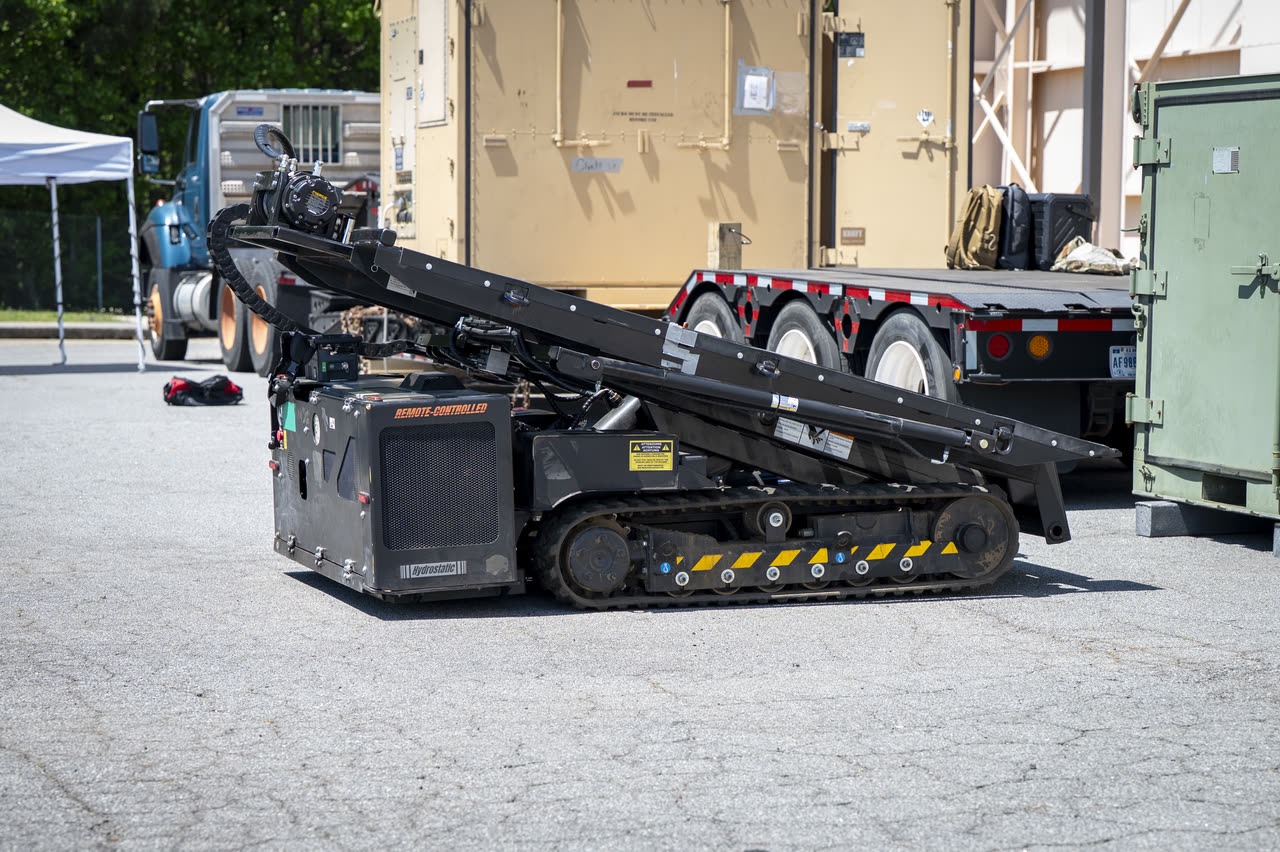
The MPEP is a small-form-factor, remote-controlled tracked vehicle, engineered so a single chassis can carry the whole flight line's worth of ground equipment.
Field exercises have proven it replaces single-function forklifts and tow tugs outright. It has towed an F‑16. It has moved an MHU‑141 munitions trailer inside a CH‑47. It runs eight hours on a tank, climbs a 60° grade, and takes diesel, JP‑8 or kerosene — whatever the theater already has.
Operators need thirty minutes of instruction. No certification, no MOS or AFSC specificity. It is fully OSHA compliant and not restricted under ITAR, which makes it releasable to partner nations without the licensing tail that stops most ground equipment at the border.
02 Transport
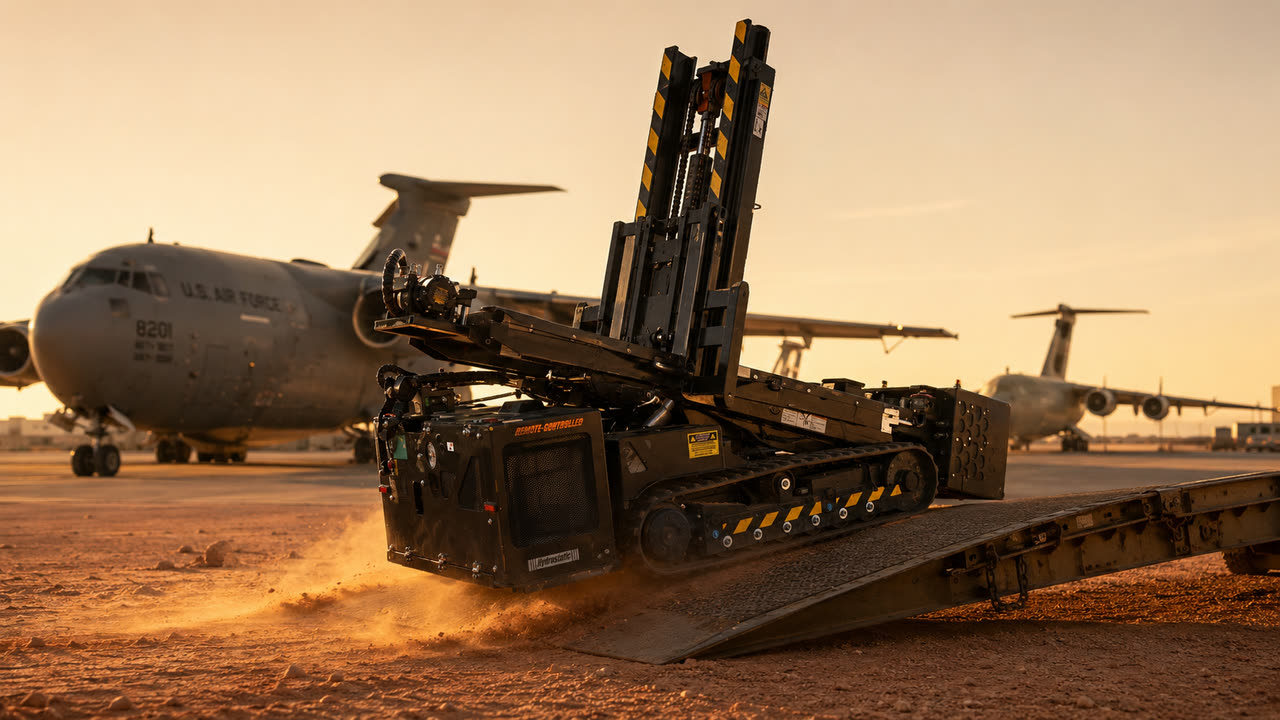
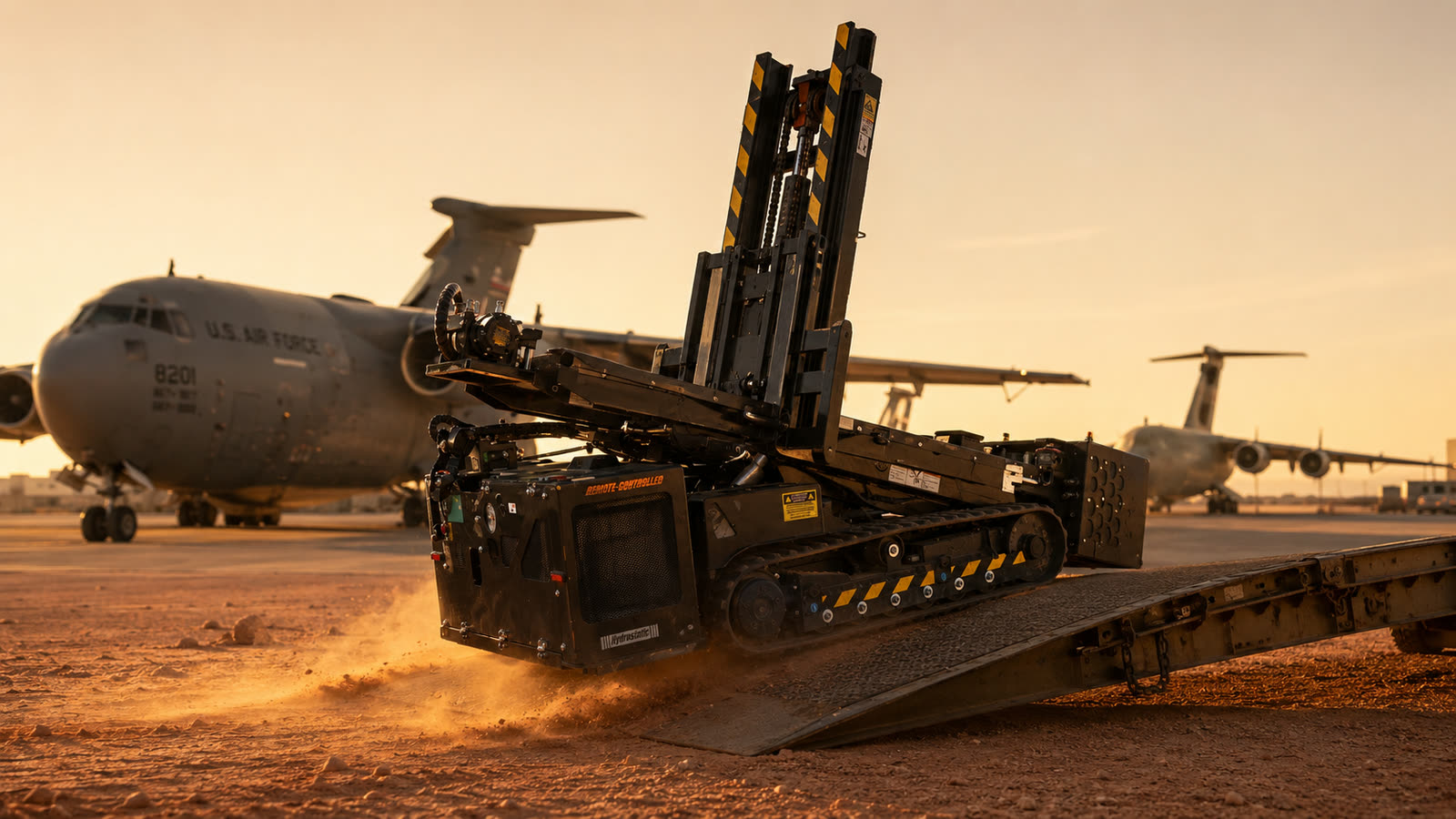
The MPEP fits inside a V‑22, CH‑47, CH‑53 or C‑130 with room to spare.
Stowed, it stands 28 inches tall and occupies less than one 463L pallet position. A 10K AT forklift — the thing it replaces — takes three or more. That difference is the whole argument: it is the number that decides whether material handling arrives on the first aircraft or the fourth.
Three 463L pallet positions on the cargo floor
Same aircraft, same sortie. The MPEP leaves two pallet positions open for cargo. The forklift it replaces leaves none.
03 Mission profiles
Forks, bucket, pallet lift platform, telescoping mast, tow hitch and counter-mine roller all mount to the same machine. Auxiliary hydraulics deliver 8 gpm to whatever is on the front.
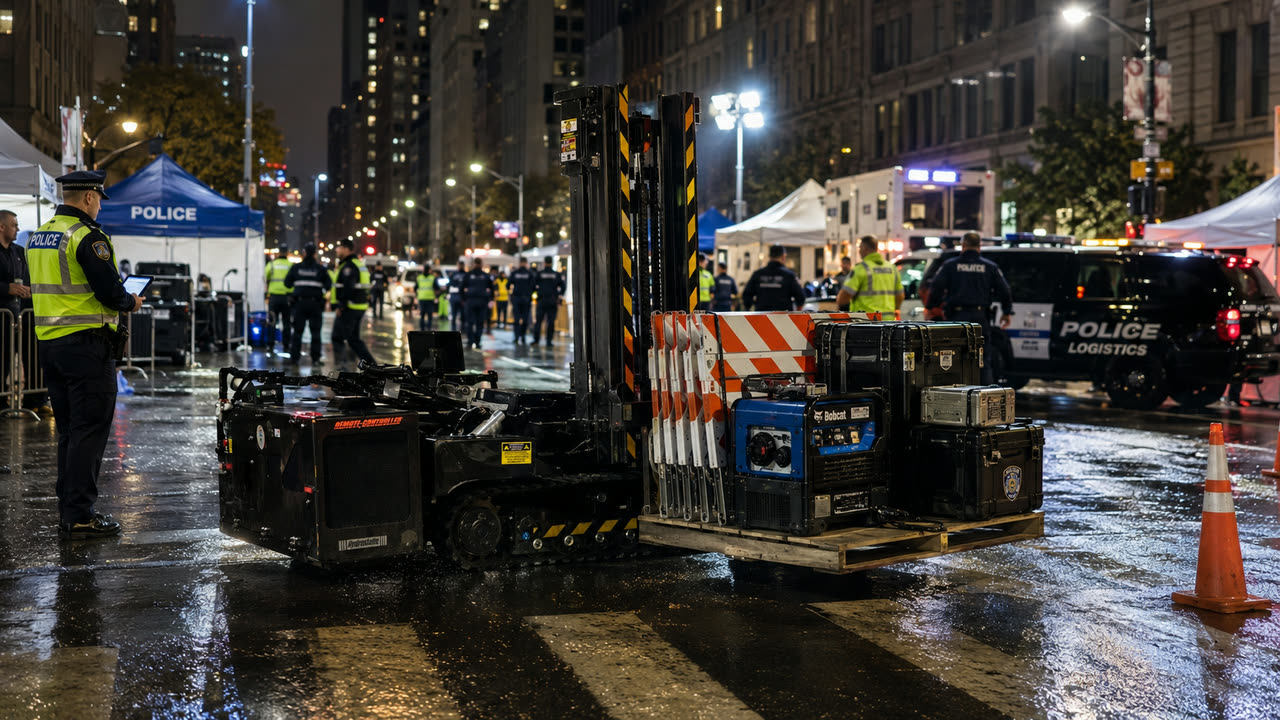
Event staging, barricade and generator movement, mobile command support and evidence-recovery lifting. At 51 to 56 inches wide it works a closed street or a parking structure a full-size forklift cannot enter.
Remote operation keeps the operator at distance during hazardous-scene work, and a thirty-minute familiarization means it is not a dedicated post on the duty roster.
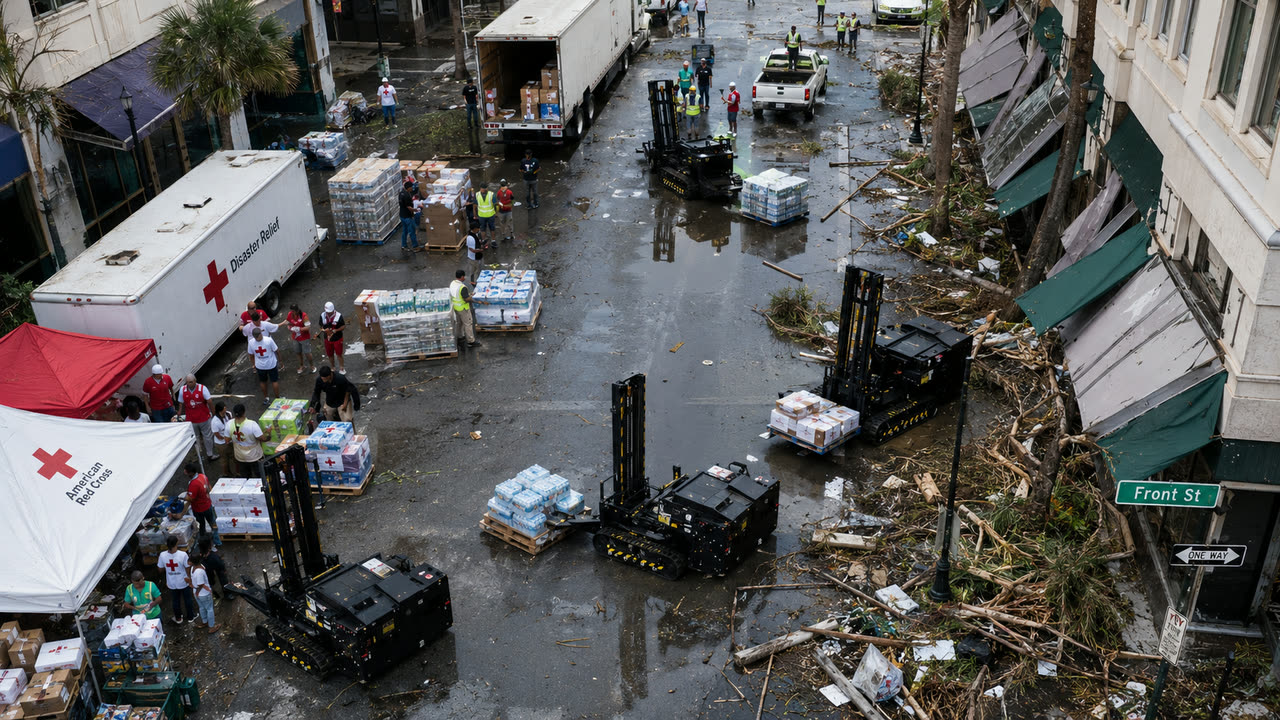
In disaster relief it traverses downed power lines and heavy debris without putting a man at risk — the operator stays back and the machine goes in.
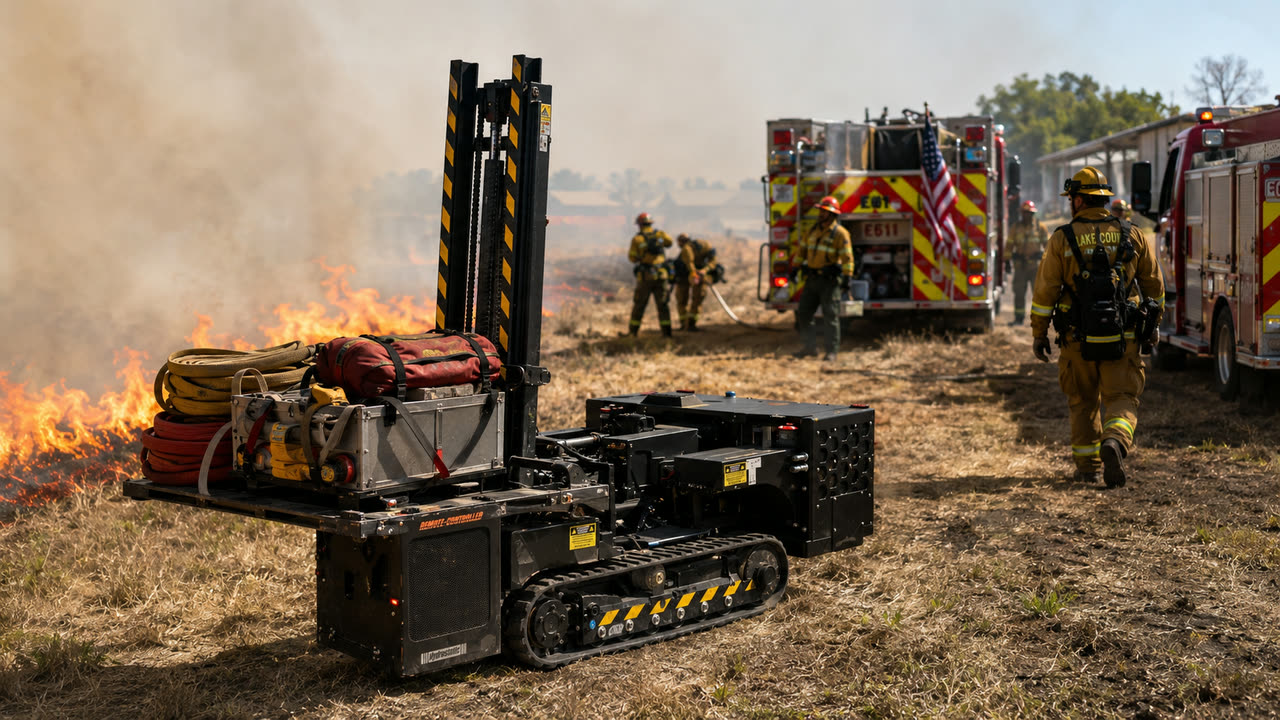
Firefighting is a named development track for the platform. In its current fielded form it moves hose, pumps and equipment across ground that will not take a wheeled vehicle, and its tracks and grade capability suit an unimproved fire line.
Runs eight hours on a tank of diesel, JP‑8 or kerosene.
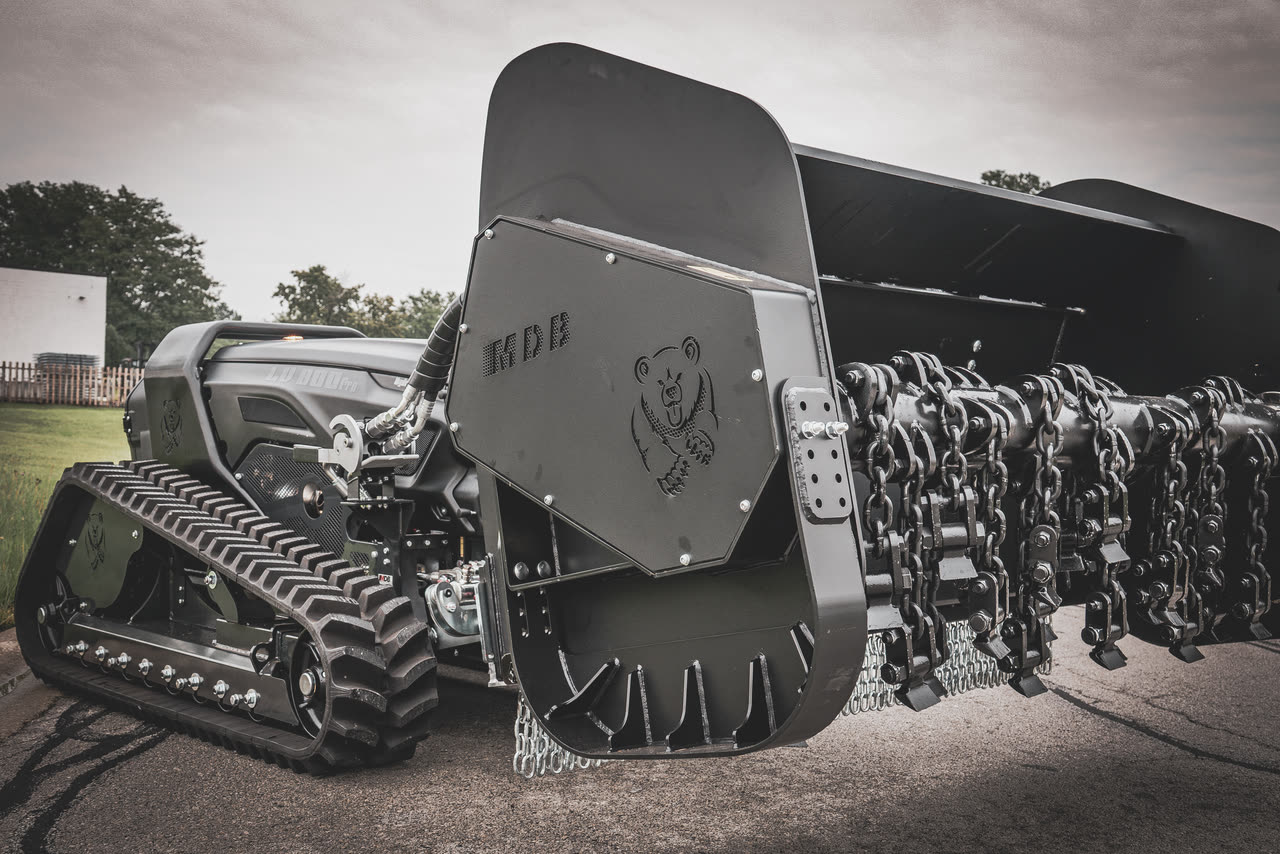
The chain flail head sweeps for mines. Chains beat the ground ahead of the machine and detonate anti-personnel mines at standoff, with the operator well behind the blast radius and nothing in front of it but replaceable steel.
A shock-absorbing arm that clears down to four inches for detection, paired with a roller to detonate, is in separate development.
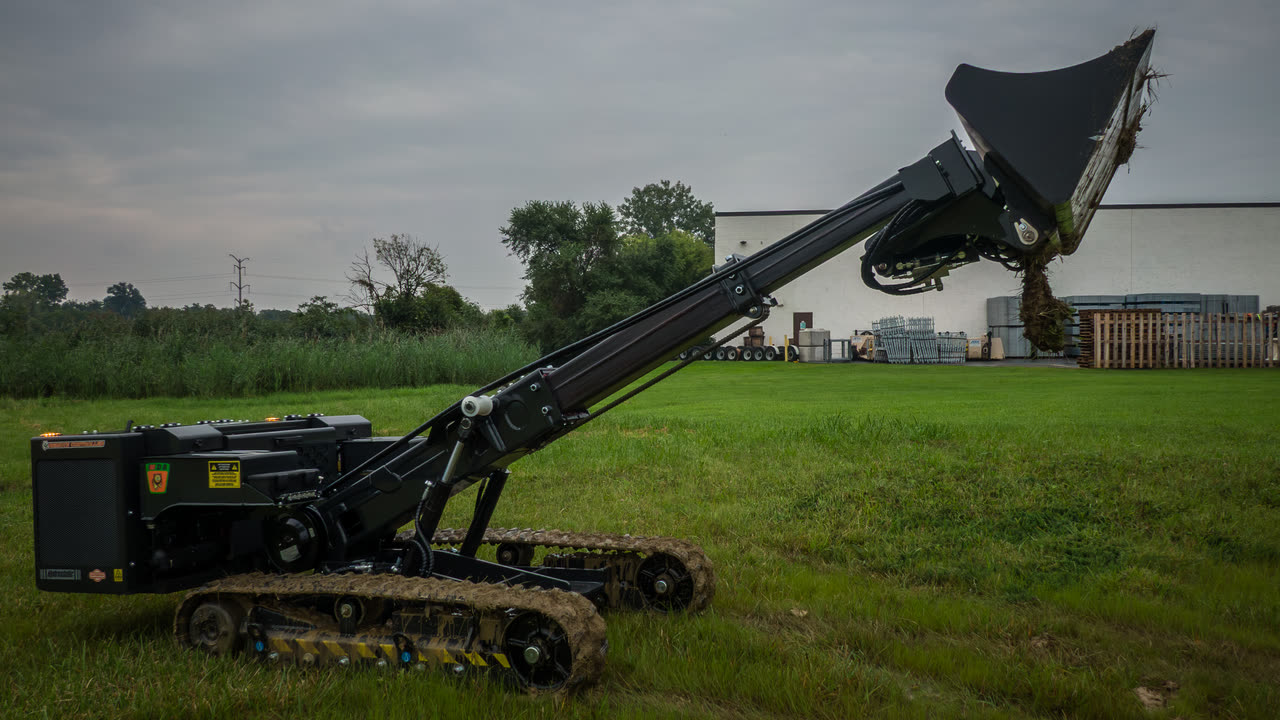
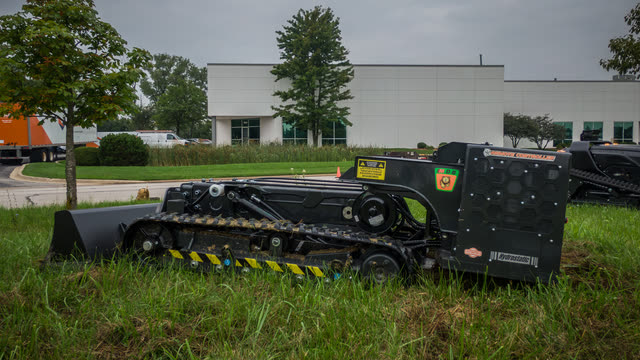
The Pocket Bucket is a dedicated dirt mover. A bucket on a telescoping boom loads spoil, clears debris and dumps over the side of a truck without repositioning. A dozer blade configuration handles grading and snow.
It is the machine that supports a mine removal team once the flail has swept the lane — moving the spoil so people do not have to.
Same remote, same operator, same half hour of training as every other implement on the chassis.
Self-deploys off the ramp and goes straight to work. Tows up to 30,000 lb on pavement — an F‑16 has been demonstrated — moves munitions trailers, and handles palletized cargo without a second piece of equipment on the ramp.
Aligned to Agile Combat Employment: the material handling arrives on the same aircraft as the mission.
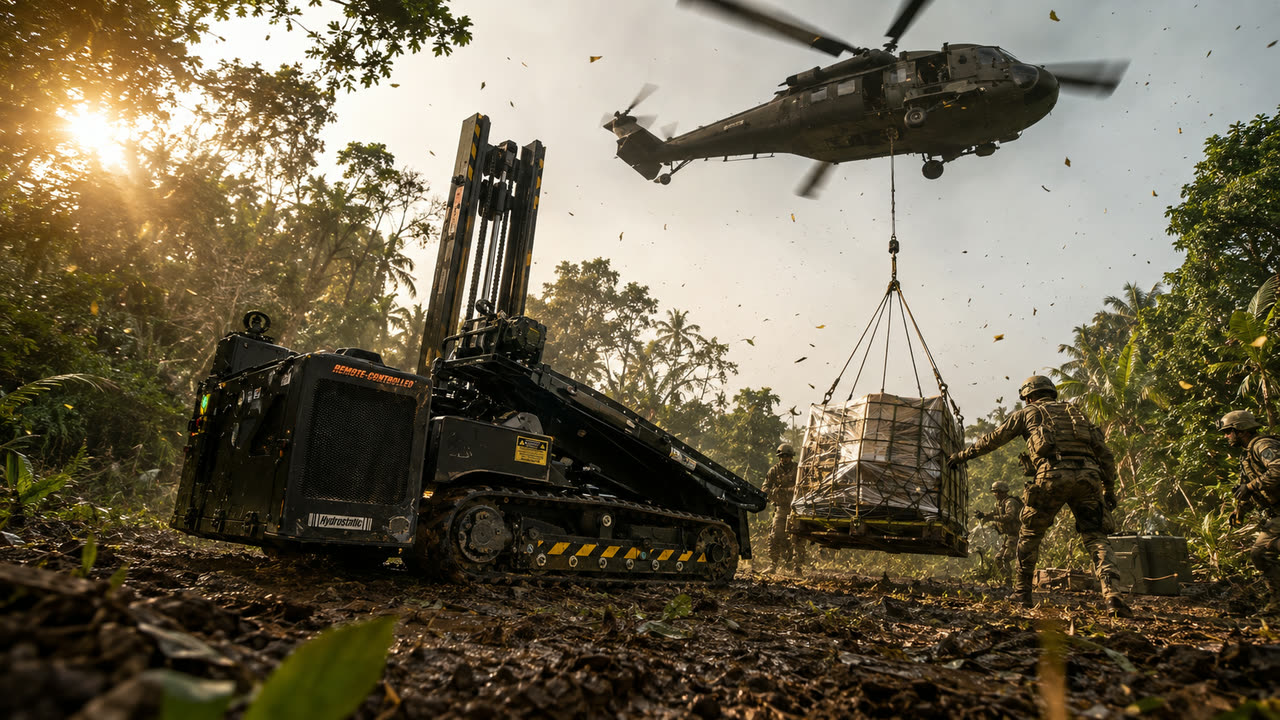
Documented to operate in forests and up steep inclines, on tracks rather than wheels: 30° fully loaded, 60° maximum angle tolerance. It works a landing zone with no prepared surface underneath it.
Eight hours of runtime per tank, on whatever fuel is already in theater.
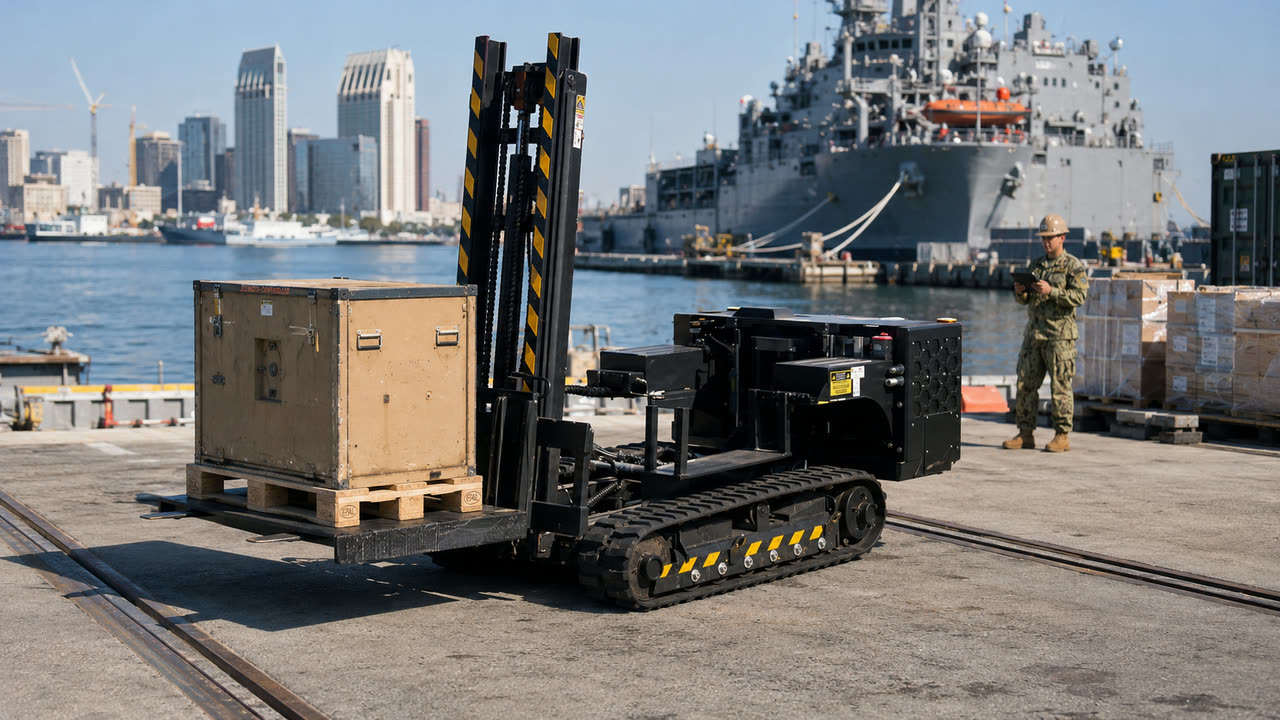
Field testing is underway in littoral environments to assess utility with roll-on / roll-off shipping and operations with Army and Marine Corps vessels.
For routine handling it needs one operator and a thirty-minute instructional session — no certification and no MOS or AFSC specificity.
Narrow enough at 51 to 56 inches to work a debris-strewn street a full-size loader cannot enter, and remote-operated so nobody has to stand next to an unstable structure. Moves palletized water and supplies and clears debris.
The same platform that supports an air base supports a county emergency operation.
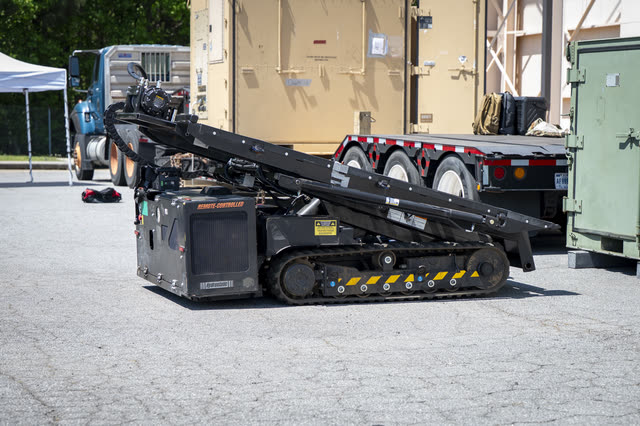
Lowers its platform to under 36 inches, pulls an ISU‑90 container or a 463L pallet onto itself, and raises the load fully to 72 inches — level with most NATO aircraft ramps. Cargo comes off the aircraft, goes to the ground, and goes back on, without a K‑loader.
Rated at 7,300 lb in this configuration, with testing underway for higher capacities. A universal attachment plate adds forks for standard wooden pallets. Controls are consistent with the base MPEP and learned in under an hour.
04 Specifications
A 10,000 lb machine has already been developed. Control is line of sight to 1,000 yards on the IMET handheld, and beyond line of sight to 6–10 miles with the Q ground control option.
05 In service
The MPEP is in production today and in use with United States Air Force and United States Marine Corps units.
It supports logistics operations in the Middle East and experimentation operations with Air National Guard units and the Air Combat Command's Agile Battle Lab. It is built almost entirely from commercial off-the-shelf parts, which makes sustainment in a forward theater cheap and unremarkable.
A 10,000 lb machine has already been developed and is in service — shown left below. Beside it, the Pocket Bucket: a dirt mover that supports mine removal teams.
Doctrinally it is aimed at Agile Combat Employment and Expeditionary Advanced Base Operations, and it is suitable for cross-service use without service-specific training.
06 Development
Integration for autonomous operation and interoperability with other unmanned ground and aerial systems.
Anti-personnel mine clearance — a four-inch-clearance implement for detection and a roller for detonation. Awaiting field validation.
Validated handling of munitions trailers; broader loading qualification in test.
Implement development for fire response and force protection applications.
Field testing in littoral environments to assess utility with Army and Marine Corps vessels.
Lift and weight-carriage capacity increases, driven by customer requirement.
■ In test ■ In development
Media
Select any frame to enlarge
Procurement
For pricing, delivery schedules, demonstration scheduling or configuration questions, contact TK Tactical directly. Demonstrations can be arranged at your facility.
Direct line
214 · 435 · 9209